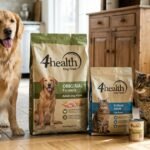
If you shop at Tractor Supply, you have probably walked past a wall of green and orange bags with the 4health label. It sits next to premium names, usually at a lower price, which naturally raises a question. Is it actually good food, or just cheap food with nice packaging?
This guide answers that directly. You will see how the brand started, what goes into its dog and cat recipes, where it does well, and where pet owners should be careful. We also cover feeding amounts, a safe switching plan, and the questions people ask most.
Quick answer: 4health is an affordable, mid-range pet food. Most recipes list a named meat first, skip artificial colors, and come in both grain-free and grain-inclusive versions. It is a solid budget pick for healthy pets, but pets with medical needs should have a vet’s approval first.
What Is 4health? A Clear Overview
4health is the private-label pet food brand of Tractor Supply Company, a US retailer focused on rural and ranch lifestyle products. The line launched around 2010 and is sold mainly in Tractor Supply stores and on its website. Published reviews have long said the food is made by Diamond Pet Foods in the United States.
Because it is a private label, the retailer designs the recipes and sells them under its own name, while a separate manufacturer produces them. This is common in the industry, and it is not a bad sign by itself. What matters is the formula, the quality control, and the track record.
The range covers:
- Dry and wet dog food
- Dry and wet cat food
- Puppy and kitten formulas
- Weight management, senior, and small breed options
- Grain-free and grain-inclusive lines
Understanding 4health’s Nutrition Philosophy
4health markets itself around simple, natural-style recipes at a fair price. The idea is that everyday pet owners should be able to feed a decent diet without paying boutique prices. You can judge that claim by looking at two things: the protein source and the overall balance.
Meat as the Primary Protein Source
Many 4health recipes name a real meat as the first ingredient, such as chicken, lamb, beef, turkey, or salmon. That matters because ingredients are listed by weight before cooking. A named meat at the top is a better sign than a vague label like “meat by-products.”
Dogs and cats both need animal protein, but cats need it even more. Cats are obligate carnivores, which means they depend on nutrients found in animal tissue, including taurine. A cat food should never rely mainly on plant protein.
Here is how to read the protein side of any 4health label:
- Look for a named meat or meat meal in the first two ingredients.
- Check the guaranteed analysis for crude protein and crude fat.
- Scan for plant protein boosters, such as pea protein or potato protein, further down the list.
- Confirm the AAFCO nutritional adequacy statement for your pet’s life stage.
Balanced, Not Overcomplicated
4health recipes tend to be straightforward. A typical formula pairs a main protein with a digestible carbohydrate, a fat source, fiber, vitamins, minerals, and sometimes probiotics. You will not find long lists of exotic extras.
Related Post: Digital Infusing Aggr8Tech Guide and Key Insights
4health Dog Food: Formula Breakdown
The dog lineup is the larger side of the brand. It is split into a few main families, and the differences between them are worth understanding before you pick a bag.
- Original: Everyday recipes, often without corn, wheat, or soy
- Wholesome Grains: Grain-inclusive recipes with rice or oatmeal
- Grain-Free: Recipes that use potato, sweet potato, or legumes instead of grains
Dry Dog Food Options
Dry food is the backbone of the range and the best value per pound. Past and current recipes have included salmon and potato, chicken and rice, beef and potato, and lamb-based puppy formulas. There are also formulas for small breeds, weight control, and senior dogs.
Common Ingredients Found in 4health Dry Dog Food
Exact recipes vary, so always read your specific bag. Across the lineup, owners commonly see ingredients like these:
- Proteins: Deboned chicken, lamb, beef, salmon, turkey, and meat meals
- Carbohydrates: Brown rice, oatmeal, potatoes, sweet potatoes, and peas
- Fats and oils: Chicken fat and flaxseed for energy and coat support
- Fiber: Dried beet pulp or similar sources for digestion
- Supplements: Vitamins, minerals, and added probiotics in some formulas
Wet Dog Food Options
The wet range is smaller. Canned formulas such as chicken and rice, beef and vegetable stew, and grain-free turkey and sweet potato stew have appeared in independent reviews. Third-party analysts have generally scored the grain-inclusive cans higher than the grain-free cans, so it pays to compare recipes within the line rather than judging the whole range at once.
4health Cat Food: What Cat Owners Should Know
Cat nutrition is less forgiving than dog nutrition. A cat needs high protein, enough taurine, and plenty of moisture to support the urinary tract. The 4health cat range is smaller than the dog range, but it covers the basics.
Dry Cat Food Features
The dry line has included an Original All Life Stages recipe and grain-free options such as chicken-based indoor cat food and whitefish and potato. There has also been a urinary tract formula. Indoor formulas usually adjust calories and fiber to suit less active cats and help with hairballs.
Dry cat food is affordable and easy to store. The downside is low moisture. If your cat eats only kibble, make sure fresh water is always available, and consider adding some wet food.
Wet Cat Food Benefits
Wet cat food is one of the strongest reasons to look at this brand. Trays and cans, such as turkey and salmon, chicken and beef, and chicken and tuna in broth, add moisture to the diet at a fairly low cost. That extra water supports hydration and kidney and bladder health.
Ingredient Quality: What Makes 4health Stand Out
Where does 4health earn its reputation? Mostly in value. You get named proteins, simple recipes, and no obvious cheap fillers in many formulas, all at a price below many premium brands.
No Artificial Colors or Chemical Preservatives
The brand states that its recipes are made without artificial colors, flavors, or preservatives. Instead, it uses natural preservation methods, commonly mixed tocopherols (a form of vitamin E) and rosemary extract.
Why does this matter?
- Artificial dyes add no nutritional value. They exist to please owners, not pets.
- Natural preservatives are a gentler option for pets with sensitivities.
- A shorter additive list makes it easier to spot what is causing a reaction.
Grain-Free vs. Grain-Inclusive Choices
4health offers both, and the split is roughly even in the dog line. This is where owners need to think carefully.
Grain-free recipes replace grains with potatoes, sweet potatoes, or legumes. They suit dogs with a confirmed grain allergy, which is far less common than many people assume.
Grain-inclusive recipes use rice, oatmeal, or similar grains. For most healthy dogs, these are a perfectly good choice.
Since 2018, the US Food and Drug Administration has investigated reports of dilated cardiomyopathy (DCM), a serious heart condition, in dogs eating certain diets. Many of those diets were grain-free and relied heavily on peas, lentils, or potatoes. The FDA has not proven a direct cause. Even so, the sensible approach is to avoid grain-free food unless your vet recommends it for your dog.
Is 4health a Good Choice for Sensitive Pets?
It can be, but it is not a guaranteed fix. Many 4health recipes avoid corn, wheat, and soy, which are common triggers for some pets. Some formulas use a single main protein and a short ingredient list, which helps when you are trying to identify a trigger.
However, the brand is not built as a strict limited-ingredient or prescription line. Several recipes include more than one protein source, and cheaper carbohydrates are sometimes used to lift protein numbers. If a pet reacts to chicken, for example, a mixed-protein recipe may still cause problems.
If your pet has itchy skin, ongoing diarrhea, or frequent vomiting, take these steps:
- Book a vet visit to rule out medical causes.
- Ask whether a proper elimination diet is needed.
- Choose one simple recipe and feed it alone for 8 to 12 weeks.
- Avoid treats and table scraps during the trial.
- Record your pet’s symptoms in a notebook.
For diagnosed conditions such as kidney disease, pancreatitis, or severe allergies, a veterinary therapeutic diet is the safer path.
Pros and Cons of 4health Pet Food
No food is perfect. Here is a balanced look.
Pros
- Affordable: Costs less than most premium and natural brands
- Named meat first: Many recipes lead with a real animal protein
- Choice of formulas: Grain-free, grain-inclusive, puppy, kitten, senior, and wet options
- No artificial colors or flavors: Cleaner label than many budget foods
- Easy to find: Available at many Tractor Supply locations across the US
Cons
- Limited availability: Mostly sold through one retailer
- Recall history: Past recalls exist, including a 2012 salmonella recall tied to a South Carolina plant and a 2013 low-thiamine cat food recall (both involving the manufacturer, Diamond)
- Mixed-protein recipes: Not ideal for strict elimination diets
- Plant protein boosters: Some formulas use potato protein or peas
- Limited sourcing detail: Reviewers note little public information on where ingredients come from
- Grain-free caution: The FDA’s DCM investigation makes grain-free less attractive for many dogs
How 4health Compares to Other Pet Foods (General Perspective)
Think of pet food in three tiers. Economy brands cost the least and often use more fillers and artificial additives. Premium brands cost the most and often use fresh meat, tighter sourcing, and extensive research. Mid-range brands sit in between.
4health belongs in the mid-range. It generally offers better ingredients than supermarket economy brands, usually at a lower price than premium names. Compared with top-tier brands, it offers less transparency about sourcing and less feeding-trial research.
When comparing any two foods, use this checklist:
- Protein: Is the first ingredient a named meat?
- Nutritional adequacy: Is there an AAFCO statement for your pet’s life stage?
- Company transparency: Does the maker explain sourcing and testing?
- Recall record: Search the FDA recall database before you buy.
Feeding Guidelines and Portion Control
Every 4health bag includes a feeding chart based on weight. Use it as a starting point, not a rule. Activity, age, spay or neuter status, and metabolism all change how much your pet needs.
General Tips
- Weigh the food. A kitchen scale is more accurate than a scoop.
- Split meals. Most adult dogs do well with two meals a day. Adult cats often prefer smaller meals through the day.
- Count treats. Keep treats under about 10 percent of daily calories.
- Check body condition. You should feel ribs under a light layer of fat.
- Adjust slowly. Change portions by about 10 percent and monitor for two weeks.
- Provide fresh water. This matters most with dry food.
- Use life-stage formulas. Puppies and kittens need more calories, protein, and minerals than adults.
Transitioning Your Pet to 4health Safely
Switching food too fast is the most common cause of an upset stomach. A gradual change gives the digestive system time to adjust. Follow this seven-day plan:
- Days 1 and 2: 75 percent old food, 25 percent 4health
- Days 3 and 4: 50 percent old food, 50 percent 4health
- Days 5 and 6: 25 percent old food, 75 percent 4health
- Day 7: 100 percent 4health
Cats are often pickier, so stretch the process to ten to fourteen days if needed.
If you see loose stool lasting more than two days, repeated vomiting, or refused meals, pause the switch and call your vet.
Who Should Choose 4health?
4health is a good fit if you:
- Want a reasonably priced food with named meat proteins
- Have a healthy adult dog or cat with no special medical needs
- Prefer a brand with no artificial colors or flavors
- Live near a Tractor Supply store
- Feed several pets and need to keep costs under control
- Want to add wet food to a dry diet without overspending
You may want to look elsewhere if you:
- Have a pet with a diagnosed medical condition
- Need a strict limited-ingredient or hydrolyzed diet
- Want detailed ingredient sourcing information
- Prefer a brand with extensive feeding-trial research
- Cannot easily buy from this retailer
Conclusion: Is 4health Worth It?
For many households, yes. 4health delivers sensible nutrition at a friendly price. Named meats, no artificial colors, and a wide choice of dry and wet recipes make it a practical option for healthy pets.
It is not a perfect answer for every animal. The brand has a past recall record, offers limited sourcing detail, and includes grain-free recipes that deserve extra thought given the FDA’s DCM investigation. The best approach is to choose a specific recipe, read the label, introduce it slowly, and watch how your pet responds.
Pet food details change over time, so confirm current formulas, manufacturing information, and recall notices on the retailer’s site and the FDA’s website before buying.
Frequently Asked Questions (FAQ)
Q1. Is 4health pet food considered high quality?
It is considered a solid mid-range food. Most recipes list a named meat first, but sourcing details are limited.
Q2. Does 4health offer grain-free options?
Yes. The brand sells grain-free dog and cat recipes alongside grain-inclusive ones.
Q3. Is 4health suitable for puppies and kittens?
Yes, there are puppy and all life stages formulas. Check the label for an AAFCO statement that matches your pet’s age.
Q4. Does 4health contain artificial preservatives?
The brand states its recipes have no artificial colors, flavors, or preservatives. Always confirm on the bag you are buying.
Q5. Can 4health help pets with sensitive stomachs?
It may help if your pet reacts to corn, wheat, or soy. Pets with serious digestive issues need a vet’s guidance.
Q6. Is 4health good for long-term feeding?
It can be for healthy pets when the recipe is complete and balanced for their life stage. Review your pet’s weight and health with your vet each year.
Q7. Should I consult a vet before switching to 4health?
Yes, especially for puppies, kittens, seniors, and pets with health conditions. Your vet can confirm the right recipe and portion size.
Conclusion
4health is a practical, budget-friendly brand that suits many healthy dogs and cats. Read the label, pick the right life stage, switch gradually, and involve your vet when your pet has special needs. A good food is the one your pet digests well, enjoys eating, and thrives on.